🏆 Awarded Acne Clinic & Clinician of the Year – 2024 & 2025 🏆
🏆 Awarded Acne Clinic & Clinician of the Year – 2024 & 2025 🏆
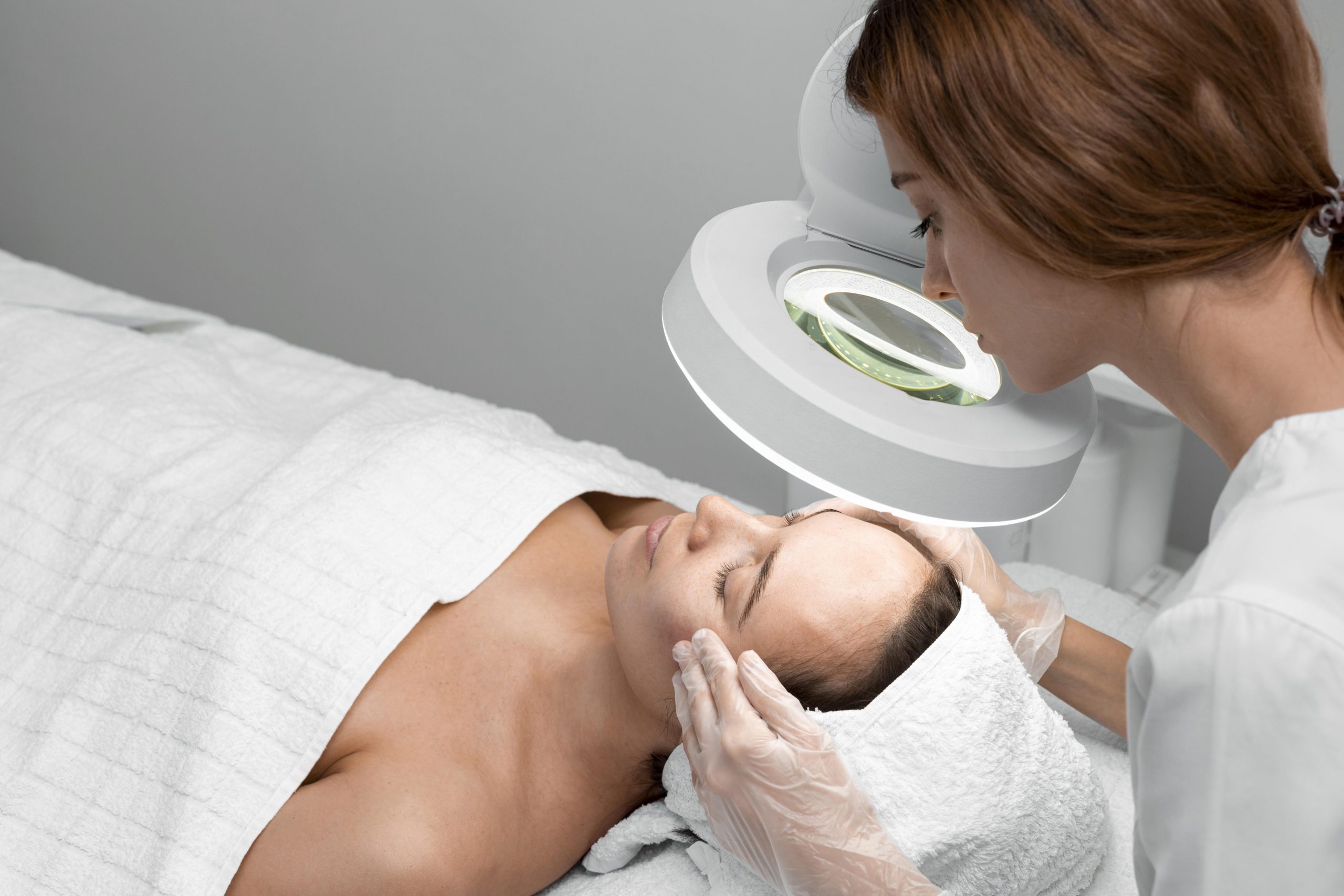
In modern dermal therapies, the focus has shifted away from simply traumatising the skin to actively supporting its regenerative capabilities. At our award-winning clinic, we now know that inducing controlled damage to the skin is only half the equation; the other half is dictating exactly how the skin rebuilds itself. You have just completed a clinical skin treatment. Whether it was a corrective chemical peel or a restorative session of skin needling, your face is likely feeling warm, tight, and visibly flushed. This inflammatory response is entirely intentional. It signals that the controlled wound-healing cascade has begun, which will eventually lead to firmer, clearer skin. However, the exact moment your primary treatment ends is also when your cells are most receptive to structural support. Light therapy can help maximise this recovery window.
Many people view LED light therapy as a relaxing, optional extra or perhaps just a brightly coloured lamp. This misconception is often fuelled by the current trend of underpowered at-home devices. In a clinical setting, however, medical-grade in-office LED light therapy is a highly targeted biological intervention. When applied immediately after invasive or semi-invasive treatments, light therapy is a non-invasive treatment that acts as an accelerator for healing, infection control, and collagen production. Understanding the benefits of LED light therapy explains why it is the ultimate tool for halving downtime and ensuring your skin will look smoother.
The clinical term for LED therapy is photobiomodulation. LED light therapy uses varying wavelengths of light to trigger photochemical changes within the cellular structures of your skin (Bian et al., 2022). Unlike laser therapy or radiofrequency treatments, non-invasive LED light does not rely on causing controlled thermal injury to force a healing response. Instead, this therapy works at a cellular level directly on the mitochondria, which function as the energy-producing batteries of your cells.
When specific wavelengths of light enter the skin, they are absorbed by light-sensitive molecules called chromophores. The principal chromophore responsible for light absorption is an enzyme in the mitochondrial electron transport chain known as cytochrome c oxidase (Bian et al., 2022). This absorption process restores cellular respiration and dramatically increases the production of adenosine triphosphate, or ATP.
ATP is the primary energy currency of the human body. When your skin cells have access to a surplus of ATP, they can repair damage, clear out cellular debris, and produce new structural proteins much faster than they could under normal conditions. This influx of cellular energy mitigates oxidative stress and significantly helps to reduce inflammation, providing the optimal environment for tissue recovery. Ultimately, this means that your skin recovers without prolonged irritation.
To understand the practical value of this cellular energy, consider what happens during skin needling. The tiny, sterile needles create thousands of micro-channels in the dermis. This controlled physical trauma alerts your body to send blood, growth factors, and immune cells to the area, resulting in the characteristic post-treatment redness and swelling.
If you leave the clinic immediately after a needling session, this redness will peak over the next 24 hours and then gradually subside over the following two to four days. However, applying clinical-grade LED light treatment while the skin is still highly active changes this timeline entirely. The light energy modulates the early stages of the inflammatory response, significantly reducing erythema (redness) and oedema (swelling) in the hours following the procedure.
By stimulating blood flow and accelerating fibroblast proliferation, phototherapy promotes faster wound closure and tissue repair (Kennedy, 2023). Patients consistently report that adding an LED light therapy session halves their expected recovery time. The intense redness that normally lasts for days is often reduced to a mild, manageable pinkness by the following morning. Furthermore, because the light stimulates the exact cells responsible for producing collagen and elastin, you are effectively compounding the structural benefits of the needling treatment itself. For enhanced cooling, some clinics even pair a hydrogel mask with our LED light protocols.
Chemical peels operate differently from skin needling, but they benefit just as much from immediate light therapy. A clinical peel removes the outermost layers of the epidermis, clearing away dead skin cells, breaking down cellular bonds, and forcing rapid cellular turnover. While this creates a smoother texture and lifts unwanted pigmentation or sun damage, it also temporarily impairs the stratum corneum, which is the skin’s primary defensive barrier. An impaired barrier leads to a spike in transepidermal water loss, meaning hydration evaporates from the skin much faster. This leaves the underlying tissues vulnerable to irritation, environmental stressors, and infection.
Applying targeted light therapy immediately after a peel soothes the exposed nerve endings and helps restore barrier function at a structural level. The non-thermal light is used to reduce the stinging, itching, or tight sensations commonly associated with chemical exfoliation. Because LED therapy increases local microcirculation, it ensures that the newly exposed skin cells receive a rich, continuous supply of oxygen and essential nutrients. This steady nutrient supply prevents the skin from becoming overly reactive and ensures the peeling and flaking process occurs evenly and predictably over the following days. Furthermore, by keeping the local immune response calm, a decision to use LED light therapy minimises the risk of post-inflammatory hyperpigmentation, making it highly suitable for all skin types, including darker skin tones.
Not all light performs the same function. Medical-grade systems use varying LED wavelengths, measured in nanometres (nm), to target skin at different depths to improve some skin conditions.
Blue light operates at a shallower depth, making it highly effective for treating the epidermis and the oil glands. It is primarily used to treat a range of skin congestion issues and active acne breakouts. The mechanism behind blue LED light therapy is fascinating. The acne-causing bacteria, Propionibacterium acnes, contain naturally occurring molecules called porphyrins. When exposed to 415nm blue light, these porphyrins absorb the energy and trigger a photodynamic reaction that creates free oxygen radicals (Kennedy, 2023). These radicals selectively destroy the bacteria from the inside out, without causing any damage to the surrounding healthy human tissue. Blue light also exerts an anti-inflammatory effect by shifting local cytokine production, which rapidly flattens angry, active blemishes.
Red light penetrates deeper than blue light, reaching the entire epidermal layer of your skin and the upper dermis. Clinical studies have shown that red LED light therapy activates fibroblast growth factors, increases the production of collagen, and decreases the enzymes that break down existing collagen (Kennedy, 2023). This makes it exceptional for overall skin rejuvenation, helping to reduce the appearance of fine lines, and restoring a healthy, dense texture to photoaged skin. Red LED light is also thought to boost collagen naturally.
While blue and red light are visible, near-infrared light at 830nm is completely invisible to the human eye. It is the most deeply penetrating wavelength used in aesthetic medicine, capable of reaching the deep dermis and subcutaneous layers.
Near-infrared light is arguably the most powerful setting for post-treatment recovery. It alters fibroblast activity, reduces severe inflammation, and promotes rapid surgical wound closure (Kennedy, 2023). When our qualified dermal clinicians select a near-infrared setting after an intensive treatment like fibroblast plasma therapy or deep needling, the primary goal is to flood the deeper tissues with energy. This shuts down excess inflammation, reduces post-procedural pain, and encourages rapid, structured tissue repair, providing glowing looking skin.
Understanding these exact biological mechanisms helps clarify why brand and build quality matter so heavily in light therapy. The Healite II system is widely considered a benchmark in aesthetic medicine because of how precisely it delivers light emitting diode energy to the skin.
For photobiomodulation to be effective, the light must be delivered at the correct intensity (irradiance) and dosage (fluence). If the light is too weak, it will not penetrate the skin deeply enough to reach the target cells. If the light scatters rather than focusing directly on the tissue, the therapeutic energy is lost. The optimal clinical irradiance for LED therapy is generally considered to be between 50 and 100 mW/cm2 (Sorbellini et al., 2018). Furthermore, professional systems incorporate hundreds of individual, high-quality diodes to ensure a consistent, uniform blanket of light over the entire treatment area, leaving no gaps in coverage.
Medical devices like the Healite II use advanced optical lens arrays to concentrate the light energy, ensuring it travels efficiently into the deep dermal layers where fibroblasts and macrophages reside. At-home LED masks simply cannot match this power output or precise delivery. They lack the necessary wattage, diode density, and optical precision to create a meaningful biological change in a short timeframe. Many consumer devices suffer from significant light scattering, meaning the energy bounces off the surface of the skin and reduce effectiveness, rather than penetrating it. While an at-home LED device might offer a modest, superficial glow with daily, long-term use, LED light therapy isn’t just about brightness. It cannot replicate the deep anti-inflammatory, cellular-charging, and pain-relieving effects of a professional session delivered precisely when the skin needs it most. LED light therapy doesn’t work effectively if the equipment lacks sufficient power.
As we see firsthand in our patient treatment results, your skin’s ability to recover determines the final quality of your aesthetic results. Prolonged inflammation can lead to complications such as post-inflammatory hyperpigmentation, while rapid, supported healing results in strong, healthy, and highly structured collagen.
Adding a session of LED light therapy immediately after your clinical procedure is not merely a soothing end to your appointment. It is a calculated investment in your skin’s biological response. By supplying your cells with the precise light energy they need to generate ATP, you bypass days of unnecessary redness, reduce your downtime, and give your skin the fuel it needs to help regenerate the skin and build a clearer, firmer complexion. Next time you book a peel or a needling session to treat various skin conditions, consider what your skin requires to heal efficiently, and ensure you give it the energy it needs to perform at its best. You’ll notice a clear improvement in your skin. Light therapy may be the crucial missing step in your regimen.


10% off automatically applied at checkout.
Located in Elevate Suites, 22 Hollywood Drive, Roxburgh Park 3064